 Save
Save The first time I stood a pasta tube upright, I felt like I was building something rather than cooking it. My hands were sticky with ricotta, the kitchen smelled like fresh basil and warm mozzarella, and suddenly this honeycomb bake wasn't just dinner anymore—it was architecture. That moment changed how I thought about what a baked pasta could be.
I made this for my neighbor's housewarming, nervous it would collapse or look messy when I cut into it. Instead, when I sliced that first wedge at her kitchen counter and the steam rose up, she went quiet. That's when I knew the standing tubes were the right choice—they held their shape like little golden promises, and suddenly everyone wanted seconds.
Ingredients
- Rigatoni pasta (500g): The tubes are your foundation here—their hollow centers cradle the cheese filling perfectly, and cooking them just under al dente lets them soak up sauce without turning mushy.
- Ricotta cheese (350g): This is your base, mild and creamy, the canvas for everything else. Fresh ricotta makes a noticeable difference.
- Mozzarella, grated (100g for filling, 150g for topping): The shredded version on top gets those gorgeous brown edges, while the small amount mixed in adds stretch and richness to the filling.
- Parmesan cheese (50g mixed in, 2 tbsp grated on top): This is your umami anchor—don't skip it or substitute with something milder.
- Large egg (1): Acts as a binder, keeping the cheese mixture from being too loose and sliding out of the tubes during baking.
- Fresh basil and parsley (1 tbsp each, chopped): Fresh herbs make this sing; dried will work but taste duller and more one-note.
- Marinara sauce (700ml): Use a good quality sauce you'd actually eat by itself—it's the moisture and flavor backdrop for everything.
- Olive oil (1 tbsp plus a little extra): Prevents sticking and adds a whisper of richness where it matters.
- Salt and black pepper (1/2 tsp and 1/4 tsp): Season with intention since the filling touches every bite.
Instructions
- Get your stage ready:
- Preheat your oven to 200°C and grease your pan thoroughly—this is not the time for butter to stick. Line the bottom with parchment so that wedge comes out clean when you slice it.
- Cook the pasta just shy of done:
- Boil the rigatoni for 2 minutes less than the package says—you want them flexible enough to stuff but still with a little resistance when you bite. Drain and toss with a thread of olive oil immediately so they don't weld together.
- Build your filling:
- Combine the ricotta, mozzarella, Parmesan, egg, herbs, salt, and pepper in a bowl until it's smooth and the herbs are evenly distributed. Taste it and adjust seasoning before you commit—this is your moment to catch any imbalance.
- Stand them upright:
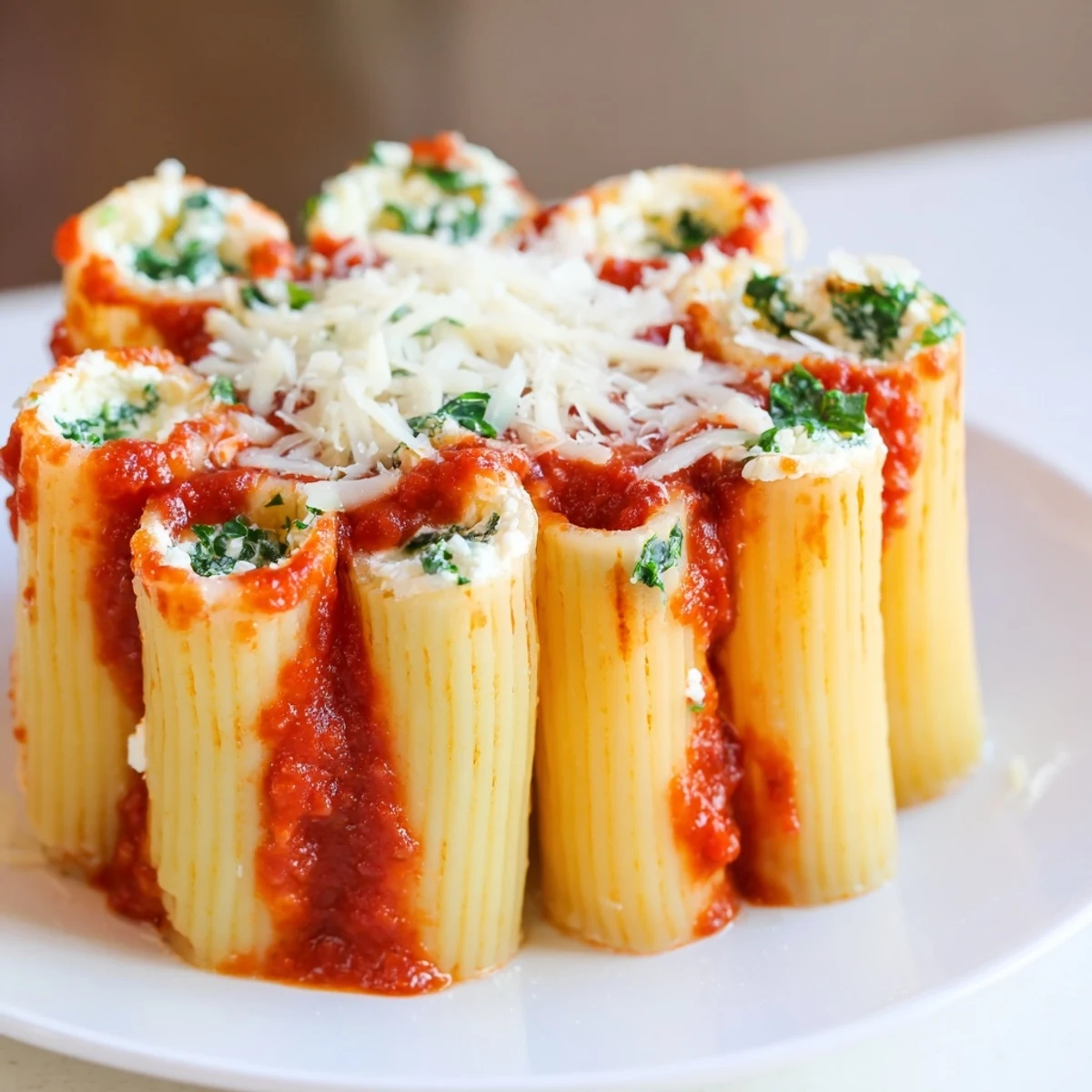
- Pack the tubes vertically in your prepared pan, fitting them snugly like a honeycomb. They should stand on their own, touching each other all the way around.
- Fill each tube:
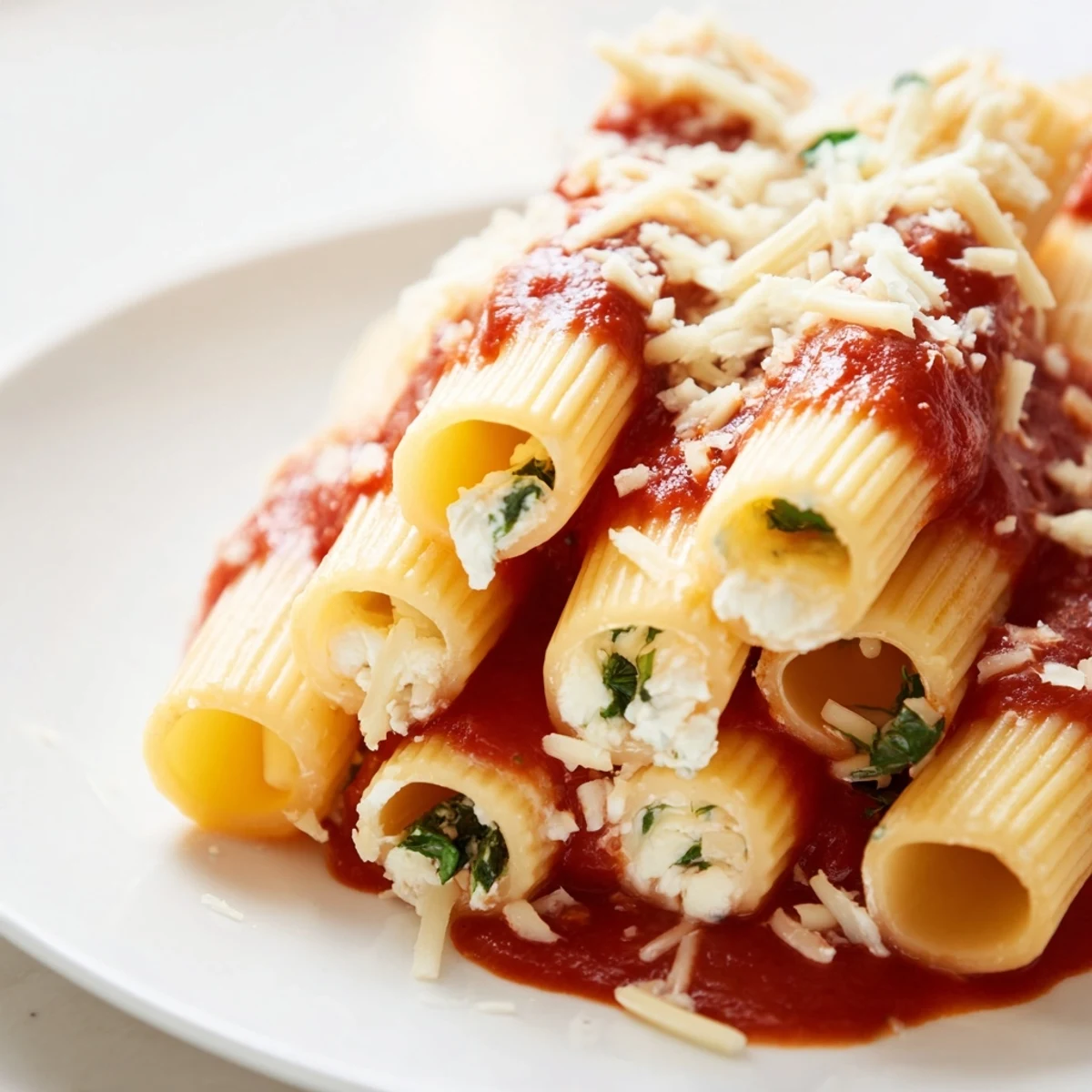
- Use a piping bag or a zip-top bag with a corner snipped off—pipe the cheese mixture into each tube until it reaches near the top, creating a little dome. This is meditative work, and it's worth doing carefully.
- Pour the sauce:
- Pour the marinara evenly over the tops and sides, letting it settle into the gaps between tubes. Gentle tapping of the pan helps without disturbing the structure.
- Add the final cheese crown:
- Sprinkle the shredded mozzarella and Parmesan over the surface—this becomes golden, bubbly, and absolutely essential.
- Bake covered then exposed:
- Cover loosely with foil (not tight—you want some steam to escape) and bake for 25 minutes. Remove the foil and bake another 10 minutes until the cheese on top is bubbling and turning golden brown at the edges.
- Rest and reveal:
- Let it sit for 10 minutes before releasing the springform or inverting onto a plate. This resting time is when the structure sets enough to slice cleanly.
 Save
Save I remember my daughter asking if we were eating a building, and I realized that's exactly what makes this dish special—it's meant to be admired before it's eaten. That little moment of wonder before the fork breaks through is part of why I keep coming back to it.
The Magic of the Upright Tubes
Standing the pasta upright might sound fussy, but it's actually a stroke of genius. The tubes create natural pockets where the sauce pools and steams the cheese from below, while the exposed tops get those burnished, bubbly edges. It's not about being decorative—it fundamentally changes how the pasta bakes and holds together. The shape becomes function, and everything tastes better because of it.
Customizing the Filling
The basic cheese filling is perfect on its own, but this is where you can bend the recipe toward what you actually want to eat. I've stirred sautéed spinach into the ricotta on nights when I wanted vegetables without changing the character of the dish. A handful of cooked Italian sausage broken into small pieces adds savory depth if that's calling to you. The filling is forgiving as long as you don't add so much extra that it becomes impossible to pipe into the tubes—think of it as a supporting actor that enhances, not overshadows, the main event.
Timing and Serving
This bake is best served warm from the oven, when the cheese is still melting and the sauce is steaming. A simple green salad beside it cuts through the richness perfectly, and a glass of Chianti doesn't hurt if you're in the mood. Leftovers reheat beautifully in a 180°C oven covered loosely with foil for about 15 minutes—they won't be quite as dramatic as the first slice, but they're still genuinely good.
- Let the bake rest for those 10 minutes even if you're hungry—it makes slicing possible instead of messy.
- A springform pan is easier to release than trying to flip it, but a deep round cake pan works fine if you're willing to invert it carefully.
- If the top isn't golden brown enough after the foil comes off, give it an extra 2-3 minutes under high heat to wake it up.
 Save
Save There's something satisfying about a dish that transforms simple ingredients into something that looks like it took hours. This bake gives you that feeling of having created something genuinely beautiful, and it tastes just as good as it looks.
Recipe FAQ
- → How do I ensure the pasta holds its shape during baking?
Cook rigatoni just shy of al dente and arrange upright closely in the pan to maintain structure while baking.
- → Can I substitute the cheese filling ingredients?
Yes, ricotta can be swapped for cottage cheese, and fresh herbs can be adjusted to taste for personalized flavor.
- → What's the best way to fill the pasta tubes evenly?
Use a piping bag or a zip-top bag with a corner snipped off for controlled and even cheese mixture filling.
- → How is the topping cheese best applied?
Sprinkle shredded mozzarella and grated Parmesan evenly over the marinara sauce before baking to achieve a golden crust.
- → Can additional ingredients be added to the filling?
Yes, sautéed spinach or cooked Italian sausage can be folded into the cheese mixture for extra flavor and texture.