 Save
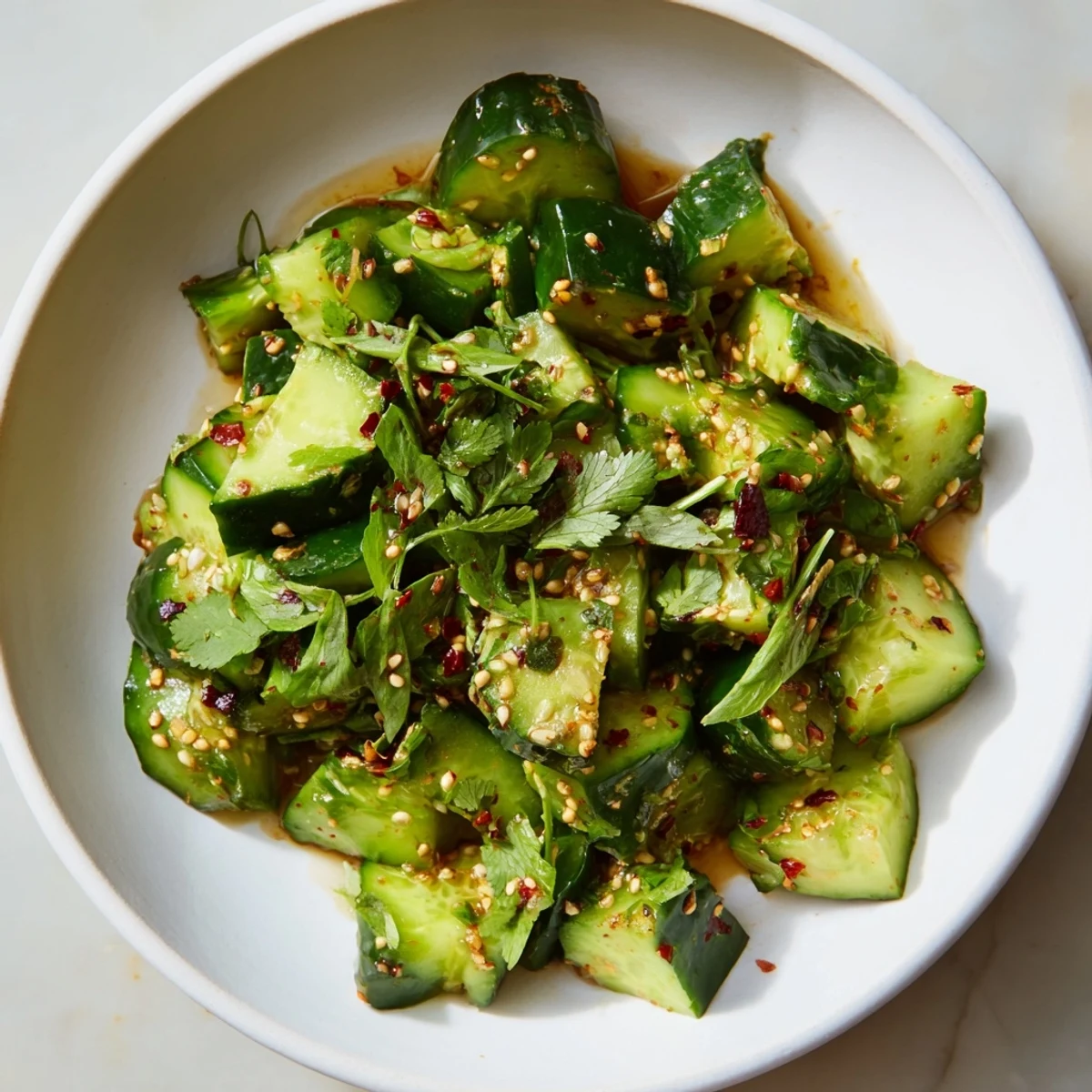
Save There's something about the sound of a knife hitting a cucumber that signals summer to me—that crisp crack that echoes through the kitchen right before everything becomes refreshing and alive. I discovered this salad years ago when a friend from Shanghai brought it to a potluck, and I watched her demolish those cucumbers with casual confidence, explaining that the smashing was the whole point. The dressing came together in seconds, garlicky and bold with just enough heat to make you pause between bites. It's become my go-to when I want something that tastes like you spent hours in the kitchen but takes barely fifteen minutes.
I made this for a family dinner once when my cousin brought his new girlfriend, and she went back for thirds without saying a word—just kept loading her plate and shaking her head like she couldn't believe how good something so simple could be. That's when I realized this wasn't just a side dish; it was the kind of thing that makes people feel looked after.
Ingredients
- English cucumbers: The seeds are minimal and the walls are thick enough to hold up to smashing without turning into mush—this matters more than you'd think.
- Soy sauce: Use full-sodium if you can; it brings a depth that light versions never quite capture.
- Rice vinegar: The sweetness in rice vinegar balances the heat in a way that regular vinegar just can't.
- Toasted sesame oil: The toasted kind is non-negotiable—it has a nutty warmth that raw sesame oil doesn't.
- Chili flakes: Start with one teaspoon and taste before adding more; you can always turn up the heat, but you can't take it back.
- Garlic: Fresh and finely minced is the only way—it needs to distribute evenly through the dressing.
- Scallions: They add a brightness and texture that keeps the salad from feeling one-dimensional.
- Sesame seeds: Toast them yourself if you can; the difference in flavor between toasted and raw is honestly dramatic.
Instructions
- Smash the cucumbers:
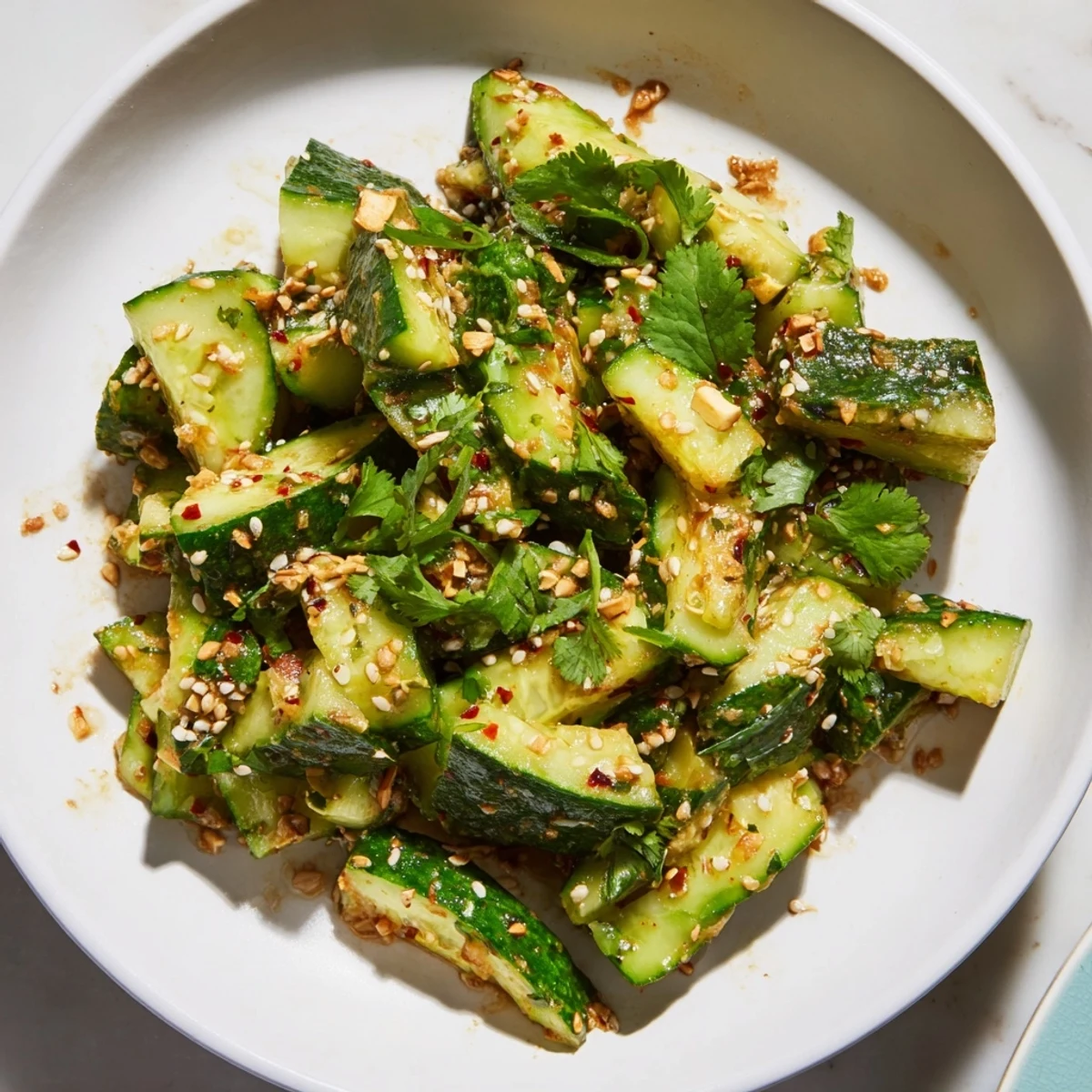
- Place them on your cutting board and use the flat side of your knife like you're cracking them open—not chopping, smashing. You want them to split naturally so the dressing can get into all those cracks and crevices.
- Draw out the water:
- Put the smashed pieces in a colander, sprinkle salt over them, and let them sit for ten minutes. This step is why the salad stays crispy instead of becoming soggy.
- Make the dressing:
- Whisk the soy sauce, rice vinegar, sesame oil, chili flakes, garlic, and sugar together in a bowl until the sugar dissolves completely. Taste it straight—it should be bold and a little aggressive because the cool cucumber will tone it down.
- Combine everything:
- Pat the cucumbers dry, add them to the dressing with the scallions, and toss until every piece is coated. Do this gently so you don't crush the cucumbers further.
- Finish and serve:
- Transfer to a platter and top with sesame seeds and cilantro if you're using it. This salad is best eaten right away while the cucumber is coldest, though chilling it for ten or fifteen minutes lets the flavors deepen.
 Save
Save My best memory of this salad is watching my eight-year-old niece try it for the first time and make that face—the one where you're caught between the heat and the freshness and you're not quite sure if you like it yet, but you keep reaching for more anyway. By the end of the meal, she was asking for the recipe to make at home.
The Secret of the Smash
Most people cut cucumbers into pieces, but smashing them is a completely different technique that changes the entire texture and how the dressing clings to them. When you crack the cucumber with the flat of your knife, you're creating irregular surfaces and breaking down the cell walls just enough so the dressing can seep in. This is why the salad has so much more character and flavor than something where the cucumbers are just sliced neatly—the chaos of the crack actually matters here.
When to Serve This
This salad lives somewhere between a side dish and a palate cleanser, which makes it useful in ways you might not expect at first. It's brilliant alongside anything grilled because the acidity cuts through richness, but it's also stunning with noodles or rice where it adds texture and brightness to every bite. I've even served it as a light lunch on hot days with some tofu or leftover chicken, and it was exactly what everyone wanted without feeling heavy.
Building Flavors You'll Remember
There's a reason this salad tastes restaurant-quality when you make it at home: every single element is doing something specific. The garlic isn't just there for taste—it's sharp enough to wake up your mouth and make you notice everything else. The vinegar and soy sauce together create a savory-salty-tangy base that feels complex even though it takes thirty seconds to mix. The sesame oil adds a whisper of nuttiness that pulls everything together at the end, and the chili flakes give you that lingering heat that makes you reach for water and then immediately reach for another bite.
- If you love heat, fresh chili sliced thin and added to the dressing will give you a different kind of kick than flakes alone.
- A squeeze of fresh lime or lemon juice right before serving adds another layer if you want the salad even brighter.
- This keeps in the fridge for a day, though the texture is best within the first few hours.
 Save
Save This salad reminds me why I love cooking—it's simple enough that anyone can make it, but it tastes like you actually know what you're doing. Serve it when you want something that feels fresh and intentional without any fuss.
Recipe FAQ
- → What type of cucumbers work best for this dish?
English or Persian cucumbers are ideal due to their minimal seeds and crunchy texture.
- → How can I adjust the spiciness level?
Modify the amount of chili flakes or add a dash of chili oil to increase heat as desired.
- → Can the salad be prepared in advance?
Yes, chilling the salad for 10–15 minutes after tossing enhances the flavors before serving.
- → What dishes pair well with this salad?
This refreshing side complements grilled meats, noodles, or rice-based dishes perfectly.
- → Are there any common allergens in the ingredients?
The dish contains soy from soy sauce and sesame from oil and seeds; gluten-free soy sauce is recommended for those with sensitivities.