 Save
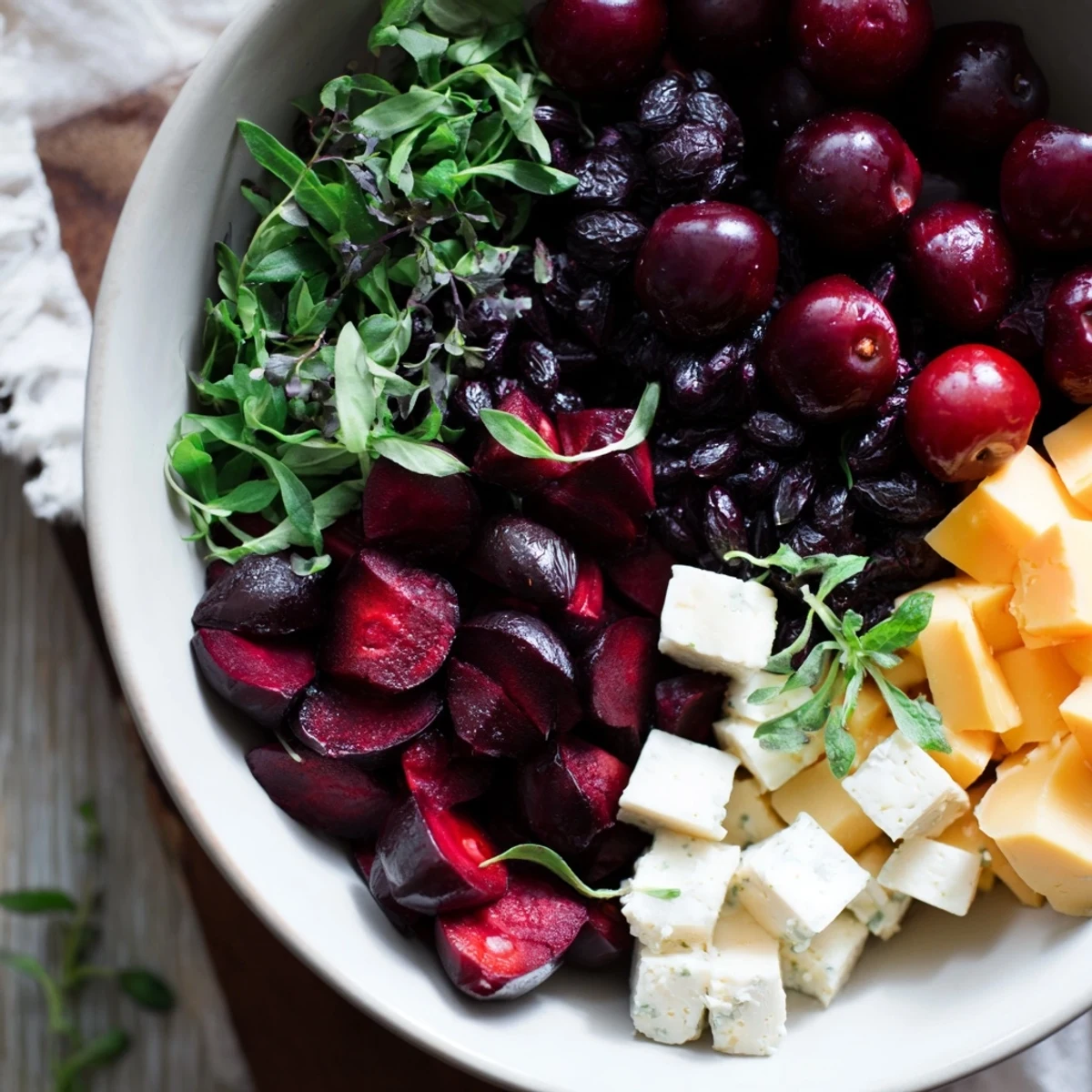
Save I'll never forget the first time I arranged a Holly Berry Cluster for my sister's holiday dinner party. I'd been overthinking it, worried that simple berries and cheese couldn't possibly look elegant enough for her refined guests. But the moment I started nestling those crimson currants and pomegranate arils among sprigs of rosemary and parsley, something magical happened—it transformed into this jeweled tapestry that looked like it belonged in a fancy magazine. Now, every holiday season, someone asks me to bring it, and I realize it's become as much about the joy of creating something beautiful as it is about the flavors themselves.
I remember bringing this to my friend Sarah's Christmas party, and what struck me most wasn't just the compliments on the platter—it was watching people slow down. In a room full of holiday chaos, guests were actually lingering, picking through the arrangement thoughtfully, pairing brie with a grape, mint with a currant. It became a gathering place at the party, a beautiful reason to pause and connect.
Ingredients
- Fresh red currants (or cranberries), 1 cup: These little jewels are the soul of this platter—they're tart, visually stunning, and they hold their shape beautifully. If you can't find currants, fresh cranberries work wonderfully, though they're slightly larger, so you'll use fewer
- Pomegranate arils, 1 cup: These add both color variation and a juicy burst of sweetness that balances the tartness of currants. Buy the pre-seeded kind if you want to save yourself time, but freshly seeded pomegranates look even more impressive
- Red grapes, halved, 1/2 cup: Halving them gives you more surface area to work with for arranging, and they add a softer, sweeter note to the berry clusters
- Goat cheese, shaped into small rounds, 200 g: The tanginess here is essential—it plays beautifully against the sweetness of the berries. I usually roll small spoonfuls in a tiny pinch of fleur de sel for a subtle sophistication
- Brie, cut into cubes, 100 g: Use a good quality brie if you can—the creaminess is what makes people linger over this cheese. Cut it while it's slightly chilled so it holds its shape
- Aged cheddar, cut into cubes, 100 g: The sharpness here is what ties everything together. Don't skip this—it provides a depth that the softer cheeses alone can't achieve
- Assorted crackers, 1 cup: Choose crackers with subtle flavors that won't compete—water crackers and thin crisps work best. You want them to be vehicles for the cheese and berries, not the star
- Baguette, sliced into rounds, 1/2 baguette (optional): Toast these lightly if you include them—it gives them structure and a subtle contrast to the soft cheeses
- Fresh flat-leaf parsley, 1 large bunch: This is your greenery foundation. The flat leaves are easier to work with than curly parsley, and they look more intentional in the arrangement
- Fresh mint, 1 small bunch: Use this sparingly—it's punchy and adds a wonderful brightness that surprises people as they eat
- Fresh rosemary, 1 small bunch: The needle-like sprigs create beautiful visual texture and a subtle herbaceous note that people taste without realizing it
- Toasted pecans or walnuts, 1/4 cup: Toast them yourself if possible—store-bought is fine, but fresh toasted brings out oils that add richness. Break some into halves so they nestle into crevices
- Honey, 2 tbsp: A light drizzle over the cheeses at the end adds a touch of sweetness and a gorgeous shine. Use good honey—it matters more than you'd think
Instructions
- Wash and dry everything with care:
- Rinse your berries and herbs gently under cool water, then pat them completely dry with paper towels. Any moisture clinging to the herbs will make them wilt, and wet berries will slide around on your platter. Take your time here—it's the difference between an arrangement that holds together and one that looks tired after ten minutes
- Create your berry clusters:
- Start by placing tight, organic groupings of red currants on your platter, letting them cluster naturally as if they're actually growing there. Nestle some pomegranate arils among them, filling in gaps. Don't overthink the placement—the beauty comes from that natural, abundant feeling. Leave enough space around each cluster for your other elements
- Nestle in the cheeses:
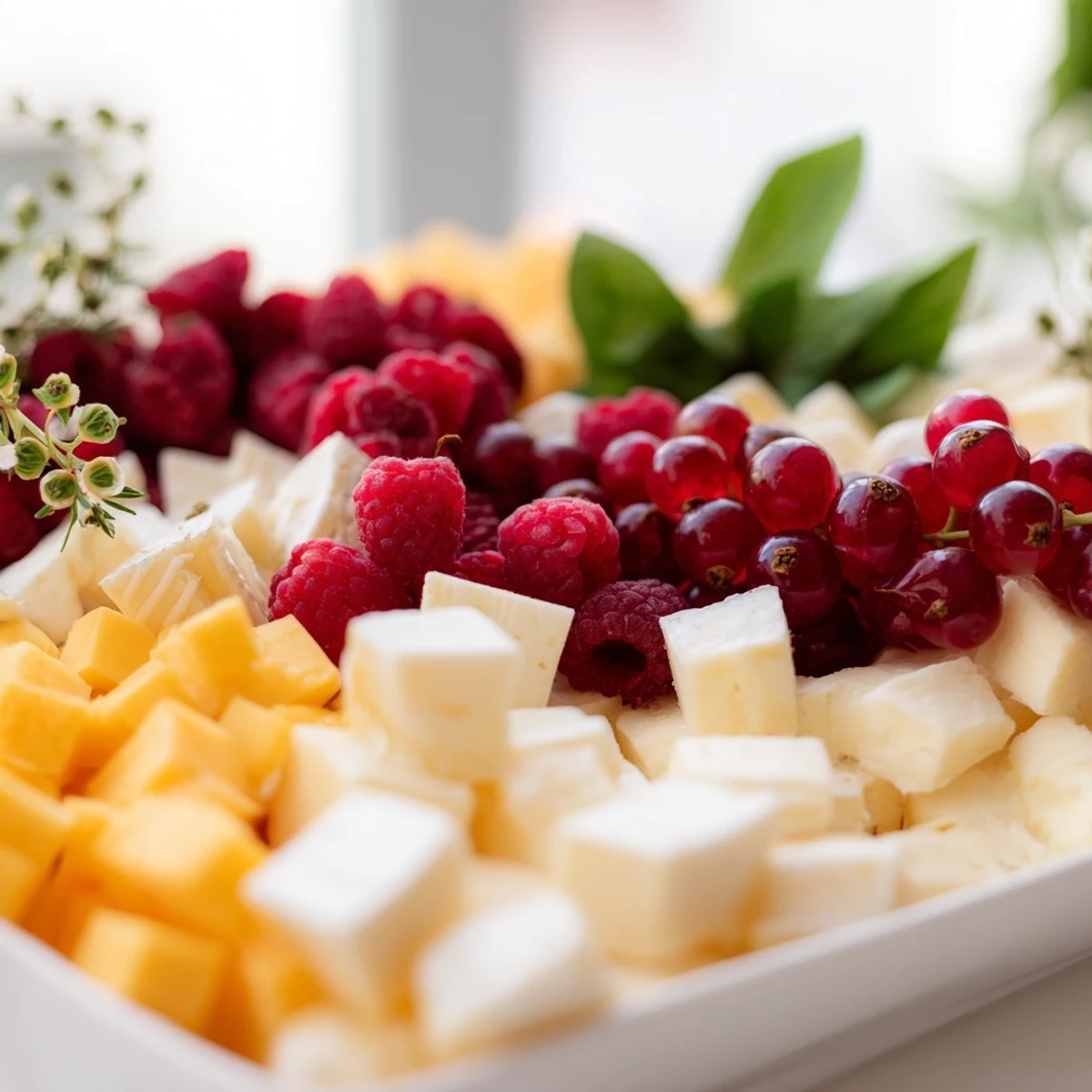
- Tuck your goat cheese rounds, brie cubes, and cheddar cubes into the spaces between berry clusters. Vary the heights slightly—some cheese sitting on berries, some nestled directly on the platter. This creates visual interest and makes it easy for guests to grab pieces
- Tuck in the herbs:
- This is where the platter comes alive. Take sprigs of parsley, small mint leaves, and rosemary sprigs and arrange them around the berries and cheeses. Position them so they look like holly leaves peeking out from between the berries. Don't be timid—use more than you think you need. The greenery should feel abundant
- Fill the gaps:
- Look at your platter with fresh eyes. Are there open spaces that feel bare? Place crackers and baguette rounds there, standing some slightly upright so they catch the light. This isn't about covering every inch—it's about creating a balanced, inviting landscape
- Add the finishing touches:
- Sprinkle your toasted nuts across the platter, letting a few fall into the natural crevices. Then, using a small spoon or honey squeeze bottle, drizzle honey lightly over some of the cheese pieces. A delicate hand here is key—you want shimmer, not puddles
- Serve with intention:
- Bring this to the table and watch people's faces light up. Serve immediately while everything is fresh and the herbs are perky. Have small plates or napkins nearby so guests can comfortably pick and choose
 Save
Save There was one dinner where a guest—a woman I'd just met—picked up a piece of goat cheese clustered with currants and rosemary, tasted it slowly, then closed her eyes for just a moment. When she opened them, she smiled at me like we'd just shared a secret. That moment crystallized why I love making this: it's not about impressing people with complicated techniques. It's about creating something so beautiful and delicious that it gives people permission to slow down and really taste.
The Art of Platter Arrangement
Arranging a platter is so much like painting with food. You're thinking about color balance, negative space, and focal points. The red berries are your dominant color, so you want them distributed across the whole surface, not clumped in one corner. The herbs provide your secondary color and texture—they should weave through the arrangement like rivers. The cheese pieces are your anchors, your pauses in the visual rhythm. Step back a few times while you're arranging and look at it from a distance. Does it feel balanced? Are your eyes drawn somewhere naturally, or does the eye jump around chaotically? Small adjustments make enormous differences in how inviting the platter looks.
Cheese Selection and Preparation
The three cheeses here are chosen deliberately for a reason—they're playing different notes. Goat cheese brings tang and elegance. Brie brings luxury and creaminess. Aged cheddar brings depth and complexity. Together, they tell a story of sophistication. The key is making sure they're the right temperature and texture before you put them on the platter. Goat cheese should be cold enough to hold its shape but not so cold that it tastes muted. Brie should be just slightly cool—if it's too cold, people will find it waxy and unpleasant. Cheddar actually benefits from being at cool room temperature, where its flavors really open up. Cut everything just before assembly so the cut surfaces don't dry out or brown.
Wine Pairing and Serving Suggestions
I've found that this platter sings when paired with something crisp and slightly acidic—a Sauvignon Blanc, a dry Riesling, or even a good sparkling wine. The acidity cuts through the richness of the cheese and complements the tartness of the berries. But honestly, this platter works with almost anything because it's such a conversation piece. Guests naturally slow down, and slowing down makes everything taste better. Some final thoughts that might save your dinner party: set this out on a beautiful platter—the container matters more than people realize—provide small plates and napkins because people will want to graze, and if you're making this for a specific event, arrange it just before guests arrive and keep a small container of extra berries in the kitchen in case someone really loves them and decimates your clusters
- The most elegant touch is using a platter that's slightly larger than your arrangement—the negative space makes it feel intentional and luxurious rather than crowded
- If berries are hard to find or seasonal, this works beautifully with pomegranate arils, fresh raspberries, or even thinly sliced strawberries
- Don't stress about perfection—the most beautiful platters look abundant and lived-in, not sterile and overly composed
 Save
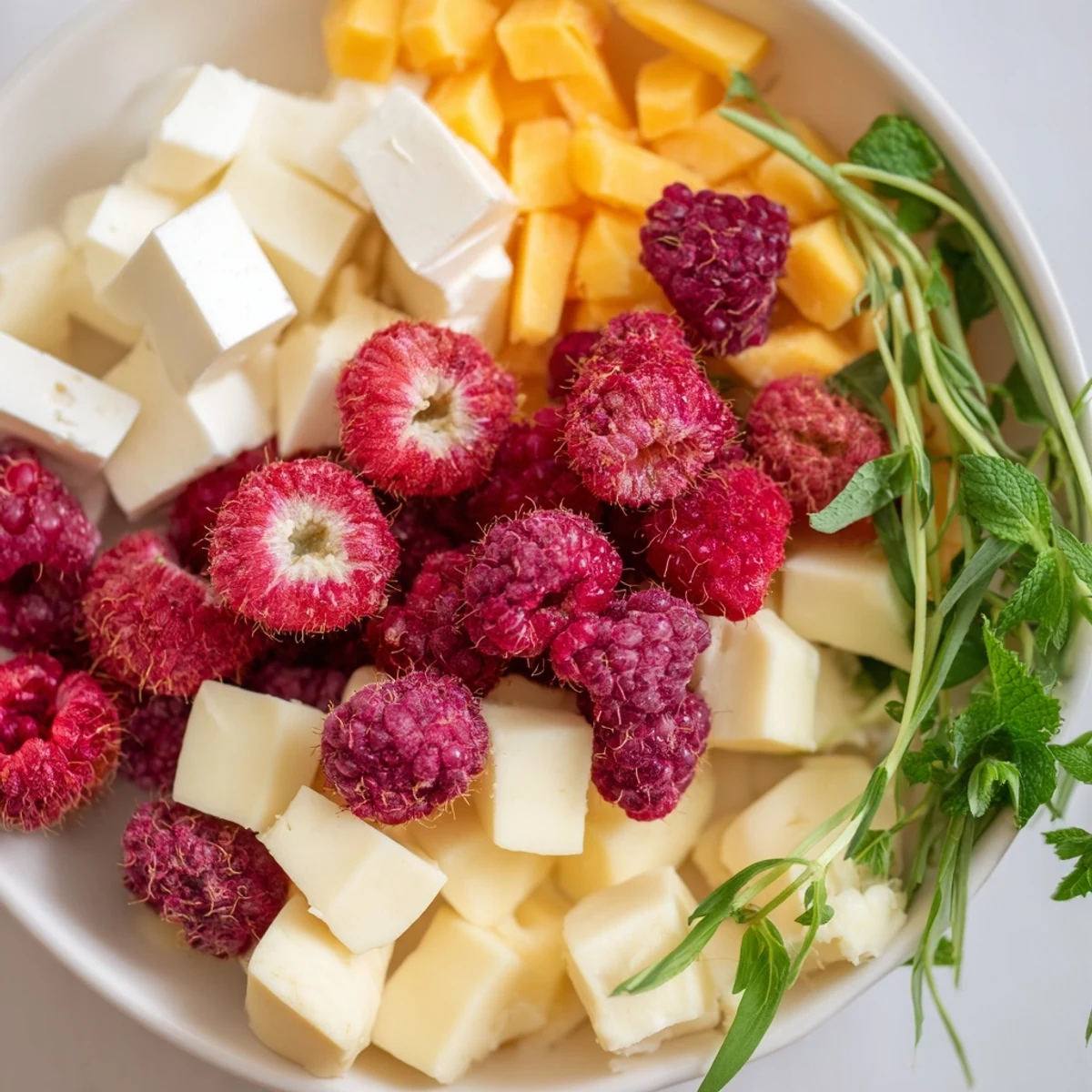
Save This platter has become my favorite thing to make when I want to bring joy without stress. It's proof that sometimes the most impressive things are also the simplest, and that food is really just an excuse to slow down and connect with the people around us.
Recipe FAQ
- → What berries work best for this platter?
Fresh red currants, cranberries, pomegranate arils, and halved red grapes provide vibrant color and a mix of tart and sweet flavors perfect for a festive arrangement.
- → Can this platter accommodate dietary preferences?
Yes, substituting plant-based cheeses allows for a vegan adaptation, and gluten-free crackers can be used to fit dietary needs.
- → How should the herbs be arranged?
Flat-leaf parsley, mint, and rosemary sprigs are tucked around the berries and cheeses to mimic holly leaves, adding fresh aroma and visual appeal.
- → What is the best way to serve this platter?
Serve immediately on a large platter, allowing guests to pick from the colorful clusters, creamy cheeses, nuts, and crackers for a festive experience.
- → Are there any pairing suggestions?
This platter pairs wonderfully with crisp white wines or sparkling beverages, enhancing the fresh and creamy elements.